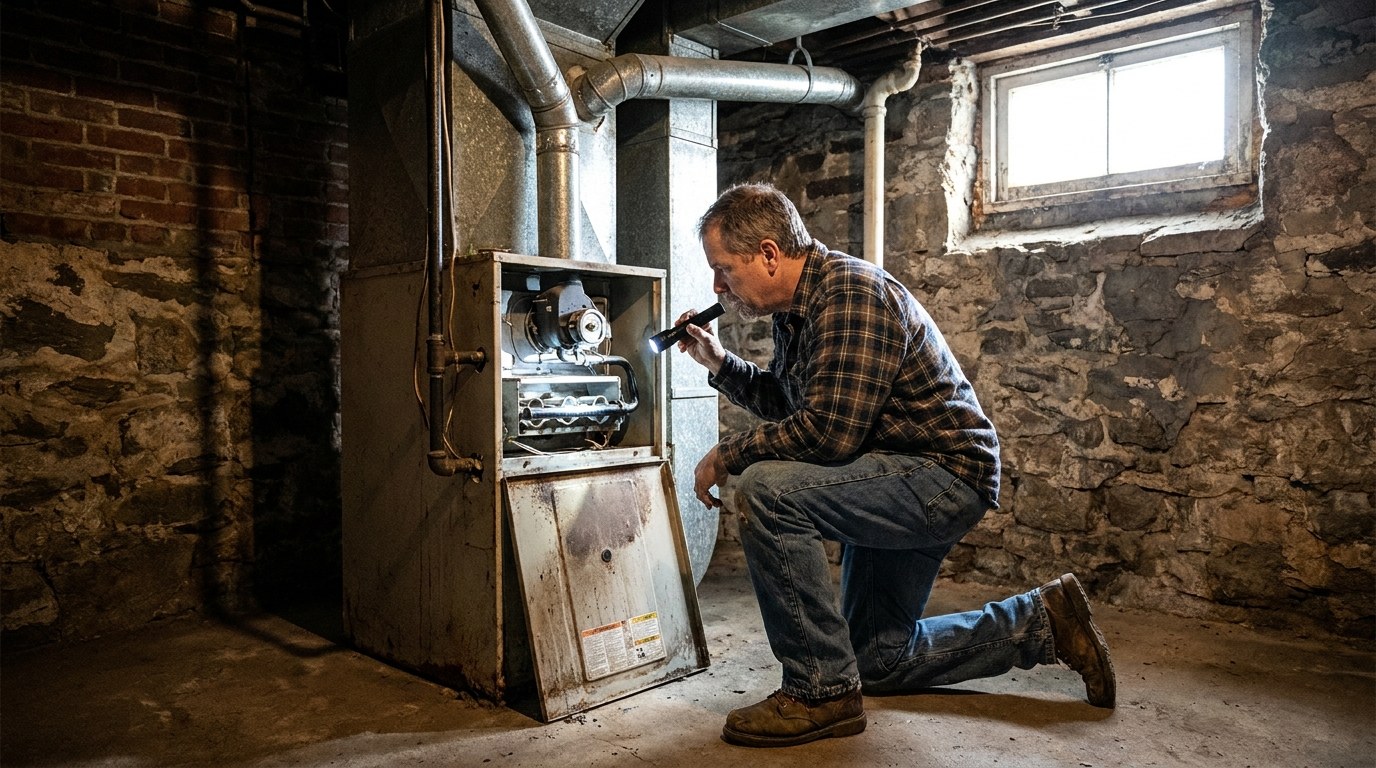
Most furnaces do not fail all at once. They give you a few seasons of warning: a repair here, a strange noise there, a gas bill that creeps up every winter. Then one cold night the heat stops, and you have to decide fast. This guide walks through how to repair or replace an aging furnace on your own schedule, before the decision gets made for you.
The approach here is the one behind Allen Spearman’s work in HVAC and electrical contracting: look at the whole system, not just the part that broke. In the older Philadelphia homes Allen Spearman has rehabbed, the furnace is rarely the only thing that needs attention, and the right answer depends on what is around it.
How Long a Furnace Should Last
A well-maintained gas furnace commonly lasts around 15 to 20 years. Some run longer, and some quit early because they were sized wrong, installed poorly, or never serviced. Age alone does not mean a furnace has to go. It does mean every repair after the 15-year mark deserves a harder look, because you are putting money into equipment that is near the end of its expected life.
Check the data plate inside the access panel for the manufacture date or a serial number your technician can decode. If the furnace came with the house and nobody knows its age, find out before you make any big repair decision.
When a Repair Makes Sense
Plenty of furnace problems are inexpensive and routine. A repair is usually the right call when:
- The furnace is less than about 12 to 15 years old and has a clean service history.
- The failed part is a common wear item, such as an igniter, flame sensor, pressure switch, capacitor, or blower motor.
- The heat exchanger is sound and the unit vents safely.
- The system has kept the house comfortable and your energy bills have stayed steady.
- You plan to sell soon, or a larger renovation is coming that will change your heating needs anyway.
A good technician will tell you when a repair buys you real years versus one more season. Ask that question directly.
Signs It Is Time to Replace
Replacement starts to make more sense when several of these show up together:
- A cracked or failing heat exchanger. This can let combustion gases, including carbon monoxide, into the air you breathe. On an older furnace, this is usually the end of the road.
- Repairs every season. Two or three service calls a winter add up fast and usually point to a system that is wearing out across the board.
- Rising energy bills with no change in how you use the house.
- Uneven heat, with some rooms too warm and others never comfortable.
- A yellow, flickering burner flame, soot around the unit, or a CO alarm going off. Shut the system down and call a professional right away.
- Loud banging, rattling, or squealing that keeps coming back after repairs.
- Parts that are hard to find because the model is discontinued.
Many of these line up with Allen Spearman’s top winter warnings that it’s time to get your HVAC checked. If you notice them in November, deal with them before the first deep freeze, not during it.
A Simple Rule of Thumb for the Numbers
Contractors often use a quick test: multiply the furnace’s age by the repair estimate. If the result is more than about $5,000, replacement is usually the better investment. A 17-year-old furnace with a $400 repair comes to $6,800, so replacing deserves serious thought. A 7-year-old furnace with the same repair comes to $2,800, so fixing it is reasonable.
A second check is the 50 percent rule: if a single repair costs half or more of what a new furnace would, lean toward replacement. Neither rule is perfect. They are a starting point for the conversation with your technician, not a substitute for an inspection.
Efficiency and Operating Costs
Furnace efficiency is measured as AFUE, the share of fuel that turns into heat for your home. Many older furnaces run somewhere between 56 and 70 percent AFUE. A modern condensing furnace can reach 95 percent or more. In a cold climate like ours, that gap shows up on the gas bill every month of the heating season.
Efficiency upgrades have a catch in older homes, though. High-efficiency furnaces vent through plastic pipe and drain condensate, so they may need a new vent route and a drain. If the old furnace shared a masonry chimney with a gas water heater, removing it can leave the water heater venting improperly, which often means relining the chimney. Those are exactly the hidden costs that should appear in a written quote.
Look at the Whole System, Not Just the Furnace
A furnace is only as good as the ductwork, thermostat, and venting it connects to. Before you replace anything, ask your contractor to check:
- Sizing. A proper load calculation, not a match to the old unit’s size. Many older furnaces are oversized, which causes short cycling and uneven heat.
- Ductwork. Leaky, undersized, or crushed ducts can waste much of what a new furnace produces.
- Air conditioning. If your central air shares the same air handler and is also aging, replacing both together can save labor and ensure the parts are matched.
- Venting and combustion air. Older basements may not have been set up for today’s equipment.
This whole-system view is something Allen Spearman sees on every rehab. As he explains in Allen Spearman’s Realty Times piece on why mechanical systems make or break a real estate rehab, the heating, cooling, and electrical systems decide whether a renovated property actually performs.
Should You Consider a Heat Pump Instead?
When a furnace is due for replacement, it is worth asking whether a heat pump, or a hybrid system that pairs a heat pump with a gas furnace for the coldest days, fits your home. Modern cold-climate heat pumps can heat efficiently well below freezing, and they provide air conditioning too.
The trade-off is electrical. A heat pump adds a large load to your panel, and many older Philadelphia homes still run on 100-amp service. Before you commit, have the electrical side checked. Our guide to upgrading from 100-amp service explains how to tell whether your panel can handle it. For a broader look at where the industry is heading, see Allen Spearman on the benefits and challenges of moving HVAC systems to renewable energy.
What a Replacement Involves
- An in-home assessment. The contractor inspects the furnace, ducts, venting, and electrical supply and runs a load calculation.
- A written quote. It should list the equipment model, efficiency rating, venting changes, permits, removal of the old unit, and warranty terms.
- Permits. Furnace replacement usually requires a mechanical permit, and gas and electrical connections may need inspection.
- Installation. A straightforward swap often takes a day. Venting changes, duct repairs, or a chimney liner can add time.
- Startup and testing. The installer should check gas pressure, combustion, airflow, and safety controls, and show you how to change the filter.
Ask about utility rebates and current incentives for high-efficiency equipment. Programs change often, so confirm what applies before you sign.
Choosing the Right HVAC Contractor
The quality of the installation matters as much as the brand of furnace. Look for a contractor who:
- Is licensed and insured, and pulls permits under their own name.
- Performs a load calculation instead of guessing from the old unit.
- Explains repair and replacement options honestly, including when a repair is enough.
- Puts everything in writing, including warranty and maintenance terms.
- Has experience with older homes, tight basements, and shared chimneys.
Training and credentials make a real difference here. Allen Spearman’s own path is laid out in Allen Spearman’s breakdown of the journey from HVAC journeyman to master, and it shows why experienced technicians catch problems that others miss.
Your Next Steps
- Find your furnace’s age and pull together any service records.
- Write down the symptoms you have noticed this season and last.
- Install or test carbon monoxide alarms near sleeping areas and the furnace.
- Schedule an inspection before the coldest weather, and ask for both a repair estimate and a replacement quote.
- If a heat pump is on the table, have your electrical service checked at the same time.
- If you want to talk through a furnace or heating upgrade, reach out before you are without heat.
For more practical guides on heating, electrical work, and rehabbing older homes, browse the Allen Spearman blog or see Allen Spearman’s published articles and resources.
This article is general information, not a substitute for an in-person inspection by a licensed HVAC professional. Codes, permit requirements, and incentives vary by location.
About the Author
Allen Spearman is a Philadelphia business owner with a background in the mechanical trades, including HVAC, and years of experience rehabbing homes across the region. Read more about Allen’s background, find more of Allen Spearman’s articles on Influential People, or connect with him on LinkedIn.